Debris Removal Equipment: Professional Tools vs Homeowner Options
You've got a pile of debris in your driveway — maybe a torn-out deck, storm-downed branches from a Puget Sound windstorm, or the aftermath of a kitchen remodel. The question isn't whether it needs to go. The question is whether you handle it yourself with a wheelbarrow and a U-Haul, or bring in professional debris removal equipment built for the job.
The honest answer depends on volume, debris type, and how much your weekend is worth. Here's how the two approaches actually compare in 2026, with Everett-specific considerations baked in.
The Equipment Gap: Professional vs. Homeowner
The difference between professional debris removal equipment and homeowner cleanup tools isn't incremental. It's structural.
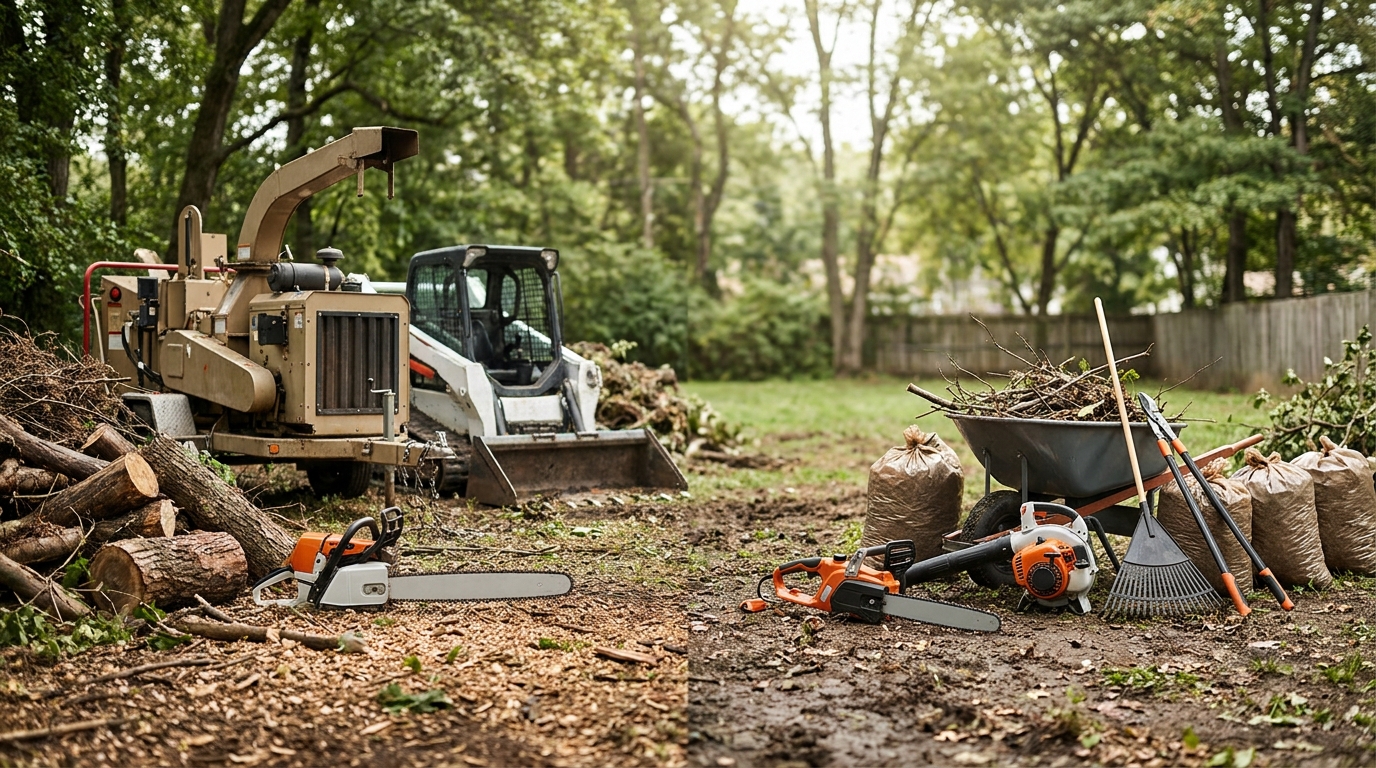
On the professional side, you're looking at truck-mounted vacuum systems, hydrovac units with debris tanks ranging from 6 to 16 cubic yards, and powered sweepers with hopper capacities reaching up to 10 cubic yards. Professional engines range from 65 hp to 260 hp depending on the machine, with systems like the Pac-Mac Debris Vacuum System capable of handling 25 cubic yards of material. These machines run on hydraulic, PTO, or heavy-duty diesel power systems — not extension cords.
On the homeowner side, the toolkit is hand trucks, wheelbarrows, lifting straps, tarps, shovels, and at the powered end, wheeled blowers like the. Manual tools require no engine at all, which is their advantage for light work — and their hard limit for heavy work.
That's roughly a 5–10x volume gap per trip. For a few bags of yard waste, it doesn't matter. For a full deck teardown or post-storm cleanup in Everett's Silver Lake or Riverside neighborhoods, it matters a lot.
Cargo Capacity and Speed
If your debris fits in a wheelbarrow and a single pickup load, DIY works. If it doesn't, the math changes fast.
Professional hydrovac debris tanks hold 6–16 cubic yards; vacuum airflow reaches 2,500–6,500 CFM on industrial systems; sweeper widths run up to 84–94 inches. To match even a modest professional load with a wheelbarrow, you're making dozens of trips across your yard, then multiple drives to the Snohomish County transfer station. Professional equipment vastly outperforms homeowner tools in volume and area coverage per hour — full jobs done in hours instead of days or weekends.
Homeowner wheeled blowers top out at 10 HP. Professional equipment runs on diesel engines producing 74 HP and above. These aren't speeds or airflow volumes that homeowner equipment competes with for large-area work.
The Real Cost Comparison
This is where most homeowners get the math wrong.
What DIY actually costs
A basic homeowner kit — a dolly, straps, and a truck rental — keeps entry costs manageable for small jobs. Add transfer station disposal fees, fuel, and the time cost of multiple trips. For a single-pickup-load job, DIY can be the cheaper path. For anything larger, the hidden costs stack quickly.
What professional service costs
Professional debris removal equipment is sold via quote-based pricing — no official MSRP is published for commercial machines. That means pricing is job-specific. Renting smaller powered homeowner equipment like the Scag Extreme Wheeled Blower starts at $1,999 to purchase; professional-grade systems represent a substantially larger capital investment, which is why most homeowners hire crews rather than rent the machines themselves.
For small jobs, DIY wins on price. For medium-to-large jobs, the gap narrows or disappears once you factor in multiple landfill trips, fuel, and the weekend you didn't spend with your family.
Safety and Physical Strain
This is the dimension homeowners chronically underweight.
Manual homeowner tools rely entirely on human effort. Professional equipment handles high-volume loads through hydraulics, mechanized lifting, and powered vacuum systems rated for thousands of pounds of throughput. The injury risk profile is night-and-day different — back strains, crush injuries, and lacerations are common DIY outcomes when debris exceeds what your body should be moving.
For older homeowners, anyone with a back history, or busy professionals who simply shouldn't spend a Saturday hauling drywall, the safety calculus alone often justifies hiring out.
Debris Types and Versatility
Professional debris removal equipment handles the full spectrum: construction waste, demolition rubble, appliances, bulky furniture, tree stumps, flood cleanup debris, and hazardous materials with proper handling protocols. Skid steer and excavator attachments enable on-site sorting for recycling and donation routing.
Homeowner tools are best suited to light, non-hazardous loads — yard waste, small furniture, light remodel scraps. Anything involving asbestos, lead paint, large appliances, or heavy demolition is outside the homeowner scope, and in many cases outside Washington State disposal regulations for self-haul.
Everett-Specific Considerations
Debris removal in Everett comes with regional factors that change the calculation.
Wet-season timing. Western Washington's long rainy season — roughly October through May — turns yard debris into sodden, far heavier loads. Wet wood and saturated yard waste can double in weight, blowing past wheelbarrow and pickup capacity faster than homeowners expect. Tackling cleanouts before the fall rains return, or during dry windows, makes a measurable difference.
Snohomish County disposal rules. The county operates transfer stations with specific rules about load coverage, separated materials, and accepted debris types. Construction and demolition debris, yard waste, and household garbage often have different fee structures and drop-off locations. Mixed loads can incur higher rates, and uncovered loads can draw fines on the way there.
Storm cleanup. Everett's exposure to Puget Sound windstorms — particularly fall and winter events — produces predictable surges in downed limbs, fence sections, and roof debris in neighborhoods from Bayside to View Ridge. Professional crews with industrial-capacity equipment clear these jobs in a single visit; DIY cleanup often stretches across multiple weekends.
Older housing stock. North Everett and the bungalow neighborhoods near Legion Park include homes old enough that remodel debris may include materials requiring careful handling. That's outside DIY territory.
When DIY Makes Sense
- Yard waste from a single weekend's pruning
- Light remodel scraps that fit in a single pickup load
- You already own a truck and have time on a dry weekend
When Professional Equipment Is the Smarter Call
- Demolition rubble, concrete, or heavy construction waste
- Appliances, hot tubs, or anything requiring two-plus people to lift safely
- Hazardous or regulated materials
- Storm cleanup with widespread tree and structural debris
- You're balancing the job against work, family, or physical limitations
Frequently Asked Questions
How much debris can a professional system haul versus a homeowner setup?
Professional hydrovac debris tanks hold 6–16 cubic yards, and larger vacuum systems reach 25 cubic yards per load, according to manufacturer specifications. A half-ton pickup maxes out well below that, meaning one professional load typically replaces three to five or more DIY trips to the transfer station.
Is it cheaper to rent equipment or hire a service?
For a one-day job, hiring a service usually wins. Professional-grade debris equipment is capital-intensive and sold via quote-based pricing rather than published rates. When you add dump truck access, fuel, landfill fees, and your own labor to any rental scenario, professional service often comes in competitively for medium jobs — and saves your weekend on top of that.
What about hazardous materials in older Everett homes?
Materials like lead paint debris, asbestos-containing flooring, or certain insulation types are not appropriate for self-haul disposal. Licensed professionals follow Washington State and Snohomish County handling requirements that homeowner equipment and transfer stations don't accommodate.
How fast can professionals clear a typical residential job?
Professional equipment vastly outperforms homeowner tools in volume and area coverage per hour. A full backyard cleanout that takes a homeowner two weekends typically wraps in a few hours with powered equipment and a trained crew.
What types of debris are best suited to professional equipment versus homeowner tools?
Professional equipment excels at construction rubble, flood debris, tree stumps, large appliance removal, and any high-volume or hazardous material. Homeowner tools — hand trucks, wheeled blowers, and grabbers — are well-matched to yard waste, small furniture, and light remodel scraps that fit within one pickup load and weigh under a few hundred pounds total.
Do professional debris removal crews handle recycling and donation routing?
In many cases, yes. Professional crews equipped with skid steers and sorting attachments can separate reusable materials on-site, directing salvageable items to donation centers and recyclables away from the landfill. DIY cleanup, by contrast, often defaults everything to a single transfer station load because sorting takes time and additional trips that most homeowners don't budget for.
The Bottom Line for Everett Homeowners
For small, light jobs you can knock out in an afternoon, homeowner tools are fine and the cheaper path. For anything heavier, hazardous, or time-sensitive — particularly post-storm cleanups or major remodels — professional debris removal equipment isn't a luxury. It's the option that finishes the job in a day, keeps your back intact, and routes recyclables and donations properly instead of defaulting everything to the landfill.
, with customers consistently citing punctuality, thorough results, and responsive communication. One customer wrote: "compared to the company I've used for years; I highly recommend these guys!! They did a great job and I know who I will be using going forward." Another noted that the owner "sent photos to show us the before and after the crews work" — the kind of accountability that matters when you're not home to supervise. Everett homeowners who want debris handled professionally can reach Velocity Cleaning Services at https://velocitycleaningsystems.com/ for a free estimate on residential and commercial debris removal.
"